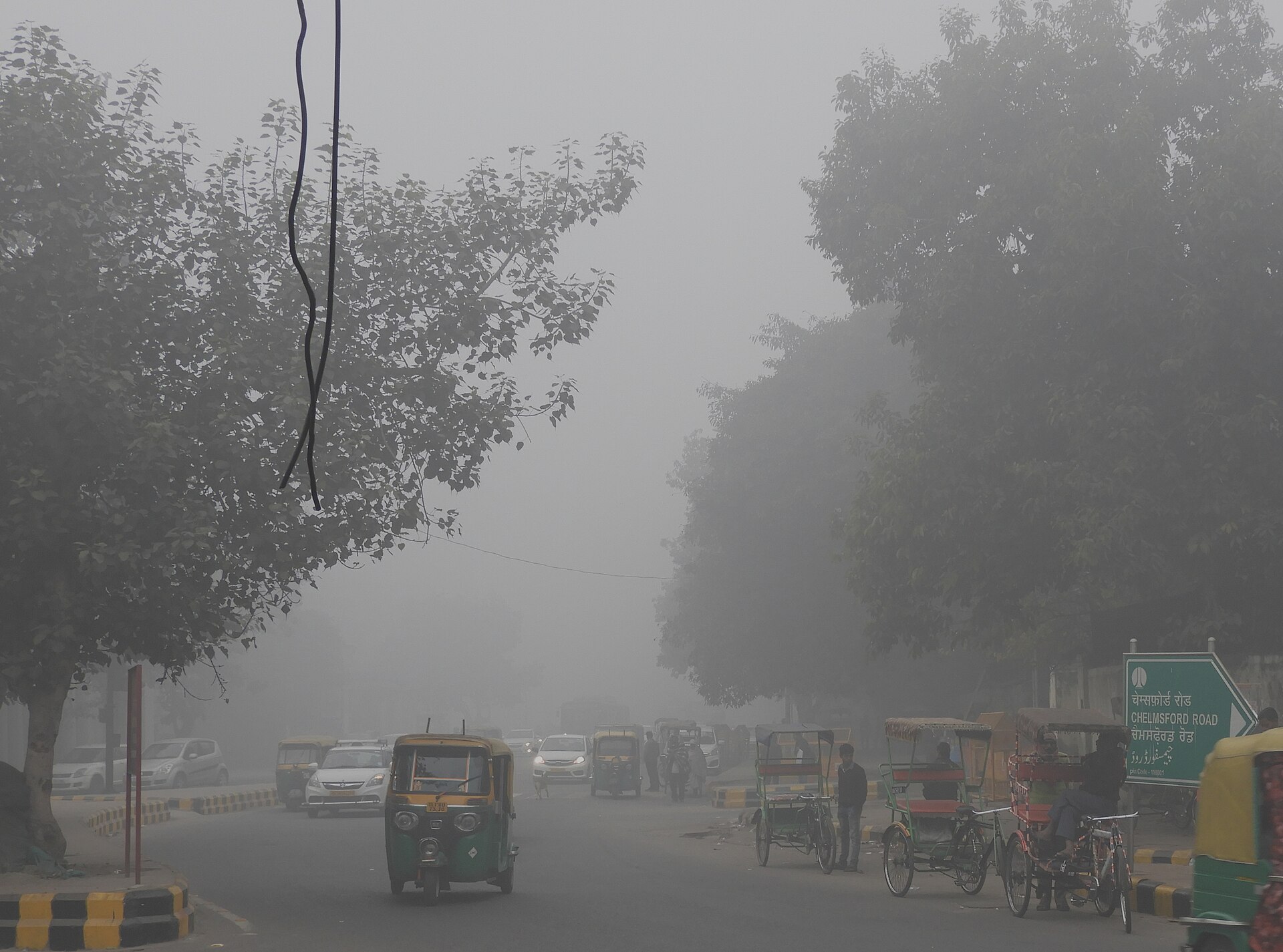
Delhi has woken up to another hazy weekend, and the rules have changed overnight. GRAP Stage 3 in Delhi and the wider NCR is now in force. So builders, drivers, schools and offices all need to adjust this week.
The Commission for Air Quality Management (CAQM) brought in the tougher curbs on Friday, 6 November 2026. It called the move a precaution ahead of Diwali, Business Today reported. Here is what that means, and what each of us can do.
What happened
Delhi’s air had stayed in the “very poor” band for four days in a row. The city’s 24-hour average AQI rose from 324 on Monday to 377 on Wednesday, according to Outlook India. By 9 am on Friday, the Central Pollution Control Board (CPCB) put it at 391, WION reported.
Some stations had already crossed into “severe”. On Friday afternoon, Jahangirpuri recorded 449, DTU 445 and Bawana 428 on the IITM air quality dashboard. As a result, a CAQM sub-committee decided to invoke Stage III of the Graded Response Action Plan (GRAP) across Delhi-NCR.
Forecasters do not expect quick relief. The IITM early warning system says the air could slip into the “severe” band over the next few days. Slow winds and a low ventilation index around Diwali will also trap more smoke near the ground.
What changes under GRAP Stage 3 in Delhi-NCR
The Stage III rules target dust and smoke at the source. According to news reports, the main curbs are:
- Non-essential construction and demolition must stop, including earthwork, piling and trenching.
- Stone crushers and mining units in the covered areas must shut.
- BS-III petrol and BS-IV diesel four-wheelers face restrictions in Delhi and nearby NCR districts, with some exemptions.
- Diesel generator sets can run only for emergency and essential services.
- States may move classes up to Class 5 online, and authorities may decide on 50% in-office attendance.
Civic bodies will also step up mechanical sweeping, water sprinkling and traffic management on busy roads.
Why it matters
Air like this hurts everyone, but it hurts some people far more. Children, older adults, pregnant women and people with heart or lung disease feel the effects first. Outdoor workers, traffic police, street vendors and sanitation workers breathe it for hours every day.
The sources of the smog are also close to home. On Thursday, the Decision Support System estimated that transport caused about 17.9% of Delhi’s PM2.5, and stubble burning about 15.6%, Outlook reported. So the problem is not only “out there” in the fields. It also comes from our roads, building sites, generators and open waste fires.
However, GRAP Stage 3 is an emergency brake, not a cure. It buys time during the worst weeks. But real change needs steady action all year round, so that the city does not reach this point every winter.
What can be done
Every institution can act now, and also plan for the next season. For example:
- Municipalities can sweep and sprinkle main roads daily, stop open waste burning and cover all stored debris.
- Hospitals can prepare for more breathing complaints, keep masks ready and avoid burning any waste on site.
- Schools can move sports and assemblies indoors, check the AQI each morning and teach children why the air turns grey.
- Workplaces can allow work from home where possible, share cabs and give outdoor staff proper masks and rest breaks.
- Panchayats and CSR teams can support farmers with alternatives to burning, and fund clean-air measures at bus stops, junctions and campuses.
Families can help too. Check the AQI before going out, keep children indoors at peak hours, and celebrate Diwali with fewer crackers and more lights.
Key takeaways
- CAQM invoked GRAP Stage 3 in Delhi-NCR on 6 November 2026, ahead of Diwali.
- CPCB put Delhi’s 24-hour average AQI at 391 on Friday morning, and some stations crossed 400.
- The curbs cover construction, mining, older vehicles, diesel generators and, if states choose, primary classes.
- Transport and stubble burning were among the largest estimated sources of PM2.5 this week.
Cleaner air needs year-round action
At Stree Sanman, we build climate technology with a human purpose. Our eTree outdoor air purifier and ECOFILT flue gas filter help cut pollution where people live, wait and work. Explore our climate action and clean air solutions, or partner with us to plan cleaner air for your city, campus or hospital.
Sources: Business Today, 6 Nov 2026; WION, 6 Nov 2026; Outlook India, 6 Nov 2026.