
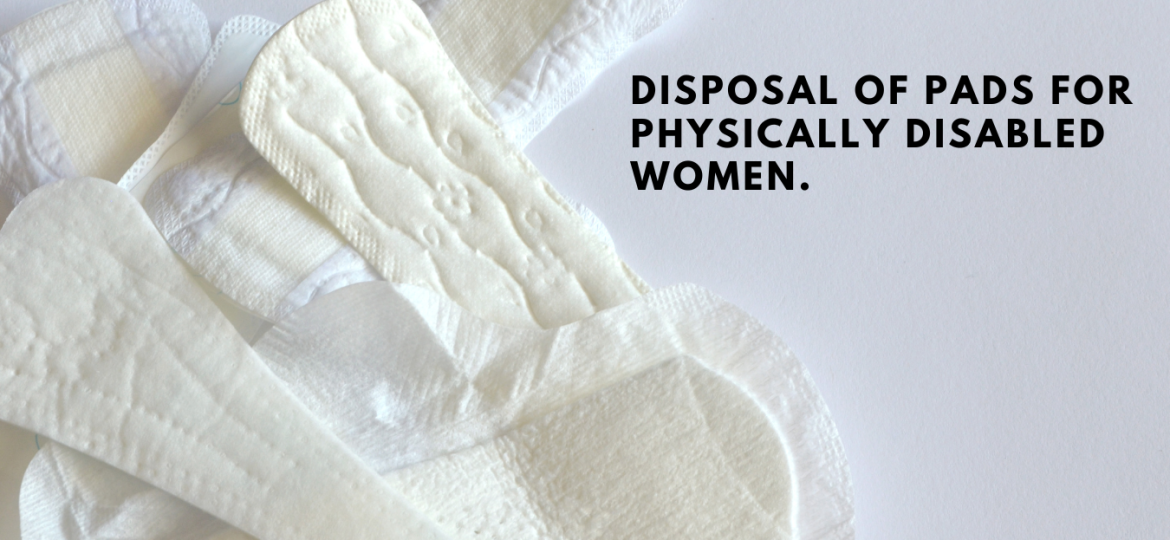
Pad disposal for women with disabilities is a challenge that rarely gets attention. Every woman needs to change her pad on time and dispose of it safely. However, for a woman with a physical disability, each of these steps can take extra effort.
The everyday challenge
Periods often come with cramps, headaches and bloating. In addition, women should change a pad every four to six hours, or sooner on heavy days. After that, the used pad needs safe disposal.
For a woman who uses a wheelchair or has limited hand movement, this routine can be hard. For example, she may struggle to reach a high dustbin or wrap a used pad neatly. As a result, she may depend on a family member or carer for a very private task.
Problems with typical washrooms
- Bins sit far from the toilet seat or in hard-to-reach corners.
- Doors and cubicles are too narrow for a wheelchair.
- There is no grab bar to hold while changing.
- Water and soap are out of reach.
Because of these gaps, many women feel embarrassed and lose their independence.
Better pad disposal for women with disabilities
Accessible washrooms
Wide doors, grab bars and low basins make a big difference. Moreover, a disposal point within easy reach lets women manage their periods on their own.
Smokeless napkin incinerators
A wall-mounted sanitary napkin incinerator placed at a comfortable height solves the disposal problem. The woman simply drops the used pad into the machine. Then it turns the pad into a small amount of ash, with no handling and no smell.
Easy access to pads
Similarly, a sanitary napkin vending machine installed at a reachable height gives women a pad whenever they need one.
Dignity for every woman
Schools, offices, hospitals and public toilets can all improve pad disposal for women with disabilities. Learn about accessibility standards from the Department of Empowerment of Persons with Disabilities. To plan an accessible setup, contact our team.