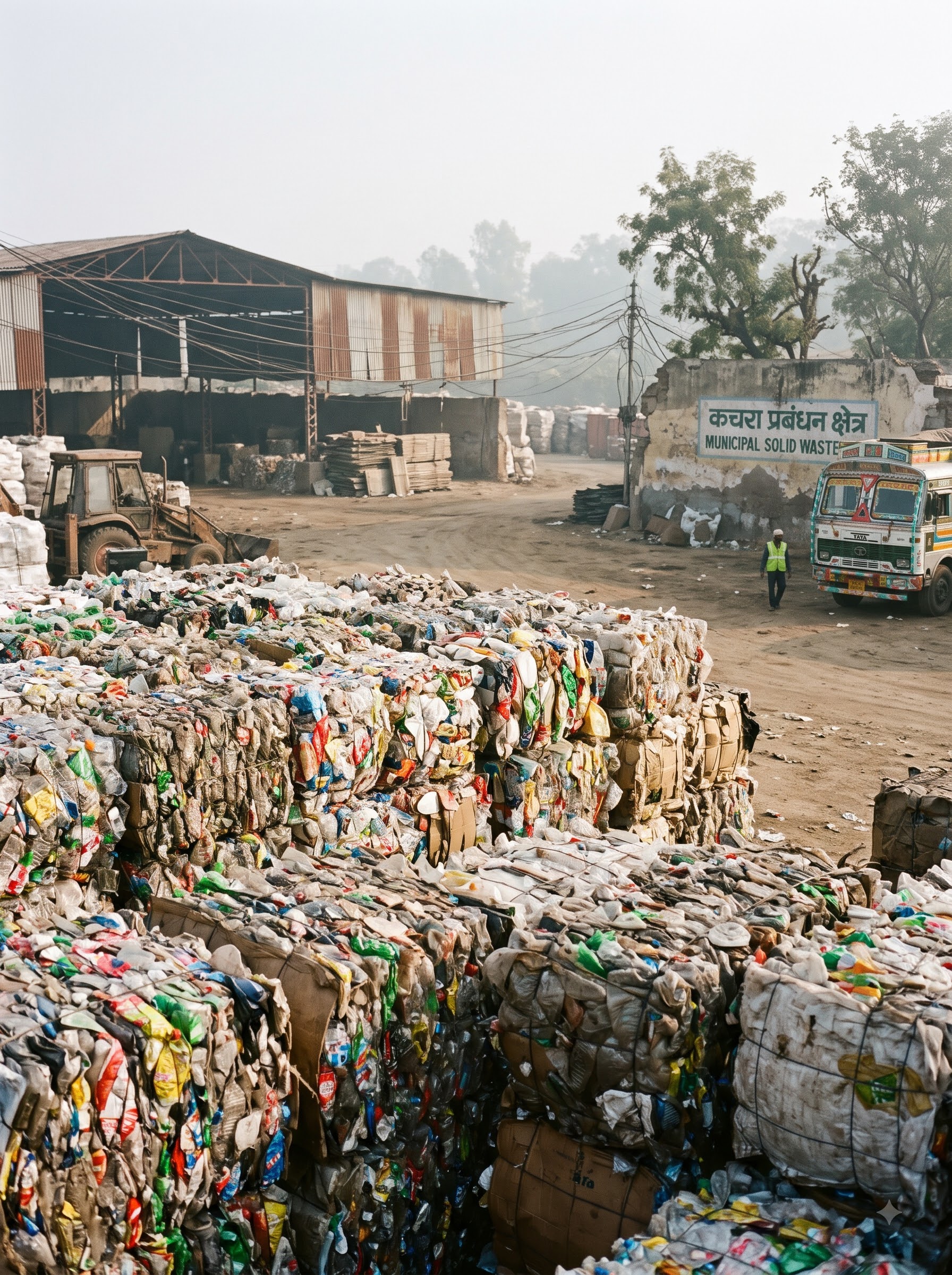
India’s legacy waste dumpsites will take longer to clear than planned. The Centre has moved the deadline to December 2027, so cities now have one more year to turn old garbage mountains into usable land.
What happened
Under Swachh Bharat Mission-Urban 2.0, every city was meant to clear its old dumpsites by October 2026. That target has now slipped. According to a report first carried by The Indian Express, the Centre has pushed the remediation deadline to December 2027. The wider mission also runs until March 2027 now.
The mission dashboard lists 2,607 legacy dumpsites. So far, cities have fully cleared 1,402 of them. Work is still going on at 1,057 sites, and 148 sites show no progress at all. In total, more than 1,000 lakh tonnes of old waste still sits on these sites.
Union Housing and Urban Affairs Minister Manohar Lal spoke about the delay at the Swachh Survekshan awards on 11 November. He also named the real problem: “The legacy waste will be cleared, but fresh waste is still going there.”
Delhi shows both sides of the story. At Bhalswa, biomining has restarted under a new contractor. Workers have removed about 1.02 crore tonnes, but around 25 lakh tonnes remain, PTI reported on 12 November. Mumbai has also started trials to remove waste from Deonar, one of the oldest dumpsites in Asia.
Why legacy waste dumpsites matter
An old dumpsite is not just an eyesore. It slowly releases methane, a strong greenhouse gas. It also catches fire in summer, and the smoke drifts into nearby homes. Rainwater seeps through the waste, so harmful liquid can reach the groundwater below.
The people who live closest to these sites feel the impact first. Many of them are low-income families, waste pickers and sanitation workers. For them, every extra year means more smoke, more smell and more flies.
There is also a simple maths problem. Cities can dig out old waste, but the mound will not shrink if trucks keep adding fresh garbage. That is why the minister’s remark matters so much. Clearing legacy waste and stopping new waste must happen together.
On the positive side, the cleared land has real value. Recovered soil can enrich parks. Sorted material can become road aggregate or refuse-derived fuel. As a result, a cleared dumpsite can turn into green space for the whole neighbourhood.
The extra year also tells smaller towns something useful. Most legacy waste dumpsites began as a convenient empty plot outside town. So the cheapest dumpsite to clear is the one that never forms in the first place.
What can be done
The new deadline gives cities time, but only if they use it well. Here are practical steps for different groups.
- Municipalities: Stop fresh waste at the gate. Collect segregated waste from every ward, and treat it close to where people generate it.
- Panchayats and small towns: Plan local treatment now, before a new dumpsite forms on the edge of the village.
- Hospitals: Keep biomedical waste apart from general waste. It should never reach a city dumpsite.
- Schools and workplaces: Teach segregation at the source, and give sanitary waste its own safe disposal route.
- CSR teams: Fund green cover on reclaimed land, and support safety gear and health checks for workers on biomining sites.
Citizens can help too. For example, they can sort waste at home, refuse open burning and ask their ward office where their waste ends up.
Key takeaways
- The deadline to clear all legacy waste dumpsites is now December 2027.
- Cities have fully cleared 1,402 of 2,607 listed dumpsites, and 148 show no progress.
- Fresh waste still reaches old dumpsites, so segregation and local treatment are vital.
- Reclaimed land can become parks, and recovered material can find new uses.
Towards cleaner cities
Old dumpsites took decades to grow, so they will not vanish overnight. But every tonne treated at the source is a tonne that never reaches the mound. Explore our safe waste and circular economy solutions, or partner with us to plan clean, local waste treatment for your city, campus or panchayat.
Sources: Siasat, citing The Indian Express (12 November 2026); ThePrint / PTI (12 November 2026); Gujarat Samachar (12 November 2026)